Going Slow to Go Faster
A few days ago, I was working with one of my weekly Kindergarten reading groups when a simple exchange turned into a profound Ah-ha moment.
One student in my group was reading aloud and as he approached a word he didn’t immediately know, he paused. He was quietly working to sound it out when another member of the group leaned over and told him the word. I reminded this friend that we need to give each reader a chance to try to figure out the words on their own.
“I just wanted to help him know it faster,” she said in apology.
“Sometimes,” I replied, “the best way to get faster IS to go slow.”

Emerging readers need time to apply their growing letter-sound knowledge and bank of high-frequency words to unfamiliar text. It can be a slow process at first and it’s easy to understand the desire to simply offer the word and move things along - especially if you are an eager new reader yourself, excited to realize that you have deciphered the code! But each time young children have the opportunity to practice a new skill, they are building the neural pathways that will one day allow it to be automatic.
And here was my ah-ha: going slowly is actually the best way to get faster with all developing skills, not just reading.
As parents, time is a luxury we don’t always feel we have. I have clear memories of shoving my kids’ feet into shoes for them because the school bus was pulling onto our street, of unpacking their backpacks for them because we were rushing to an afterschool activity, and of cutting their food for much longer than I should have because I just wanted them to eat before someone melted down at the dinner table!

That’s why I deeply appreciate the intentional ways our teachers build time into the day at LCDS. They know that in order to develop confidence and independence, young children need protected spaces to explore, practice, and apply new skills. It’s not without challenges, we have schedules to work within at school as well. But planning ahead allows teachers to thoughtfully structure the day so that our friends can take it slow and not feel pressure to rush. Perseverance and determination are cultivated in these unhurried moments, when children are given the chance to try, problem solve, and try again.
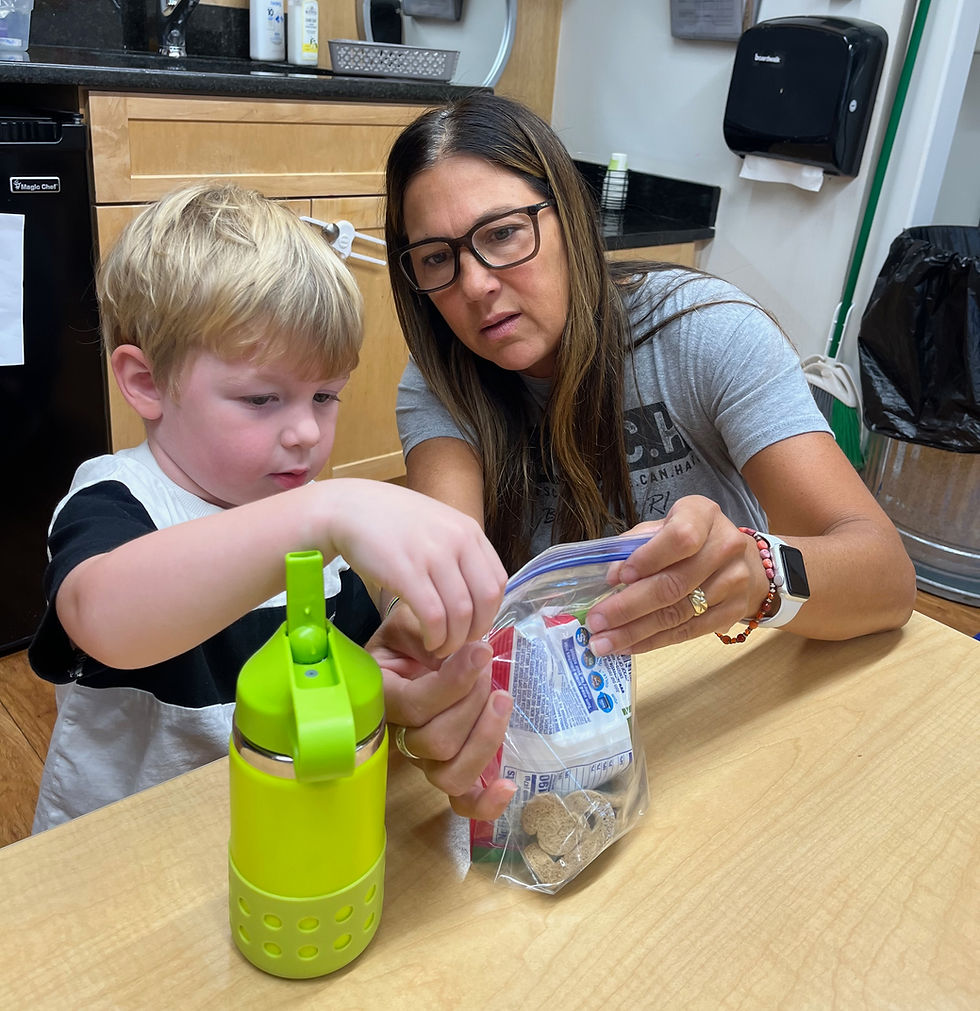
Developing the fine motor strength and coordination required for everyday tasks like cutting with scissors, writing with control, opening and closing food containers and dressing oneself takes practice. Self-help skills like these are embedded into our curriculum and we value the time it takes our young friends to master them. As adults, it's natural to feel like we are sparing a child frustration if we jump in to help, but a sign hanging outside several classrooms offers this friendly reminder:

When you cut it for me,
write it for me,
open it for me,
find it for me,
tie it for me …
all I learn is that you
can do it better than me.
I am humbly reminded of exactly this each time I ask my now grown children for help with something on my phone. Typically, they simply take it out of my hands and do it for me. While this is certainly faster than painstakingly explaining each click (“Wait, which one?”), the result is that the next time, I inevitably have to ask them again!
When children humans of any age are working to acquire a new skill, the most effective support we can offer them is TIME: time to go slowly so their bodies and brains can build the muscle memory needed to be able to go faster in the future.
By honoring the natural pace of childhood, our teachers create an environment where growth is steady, meaningful, and rooted in joy.
Let’s keep learning together,
Andrea